I Thought I Was Doing It Right: Why a Jute Tablecloth Is a Bad Idea

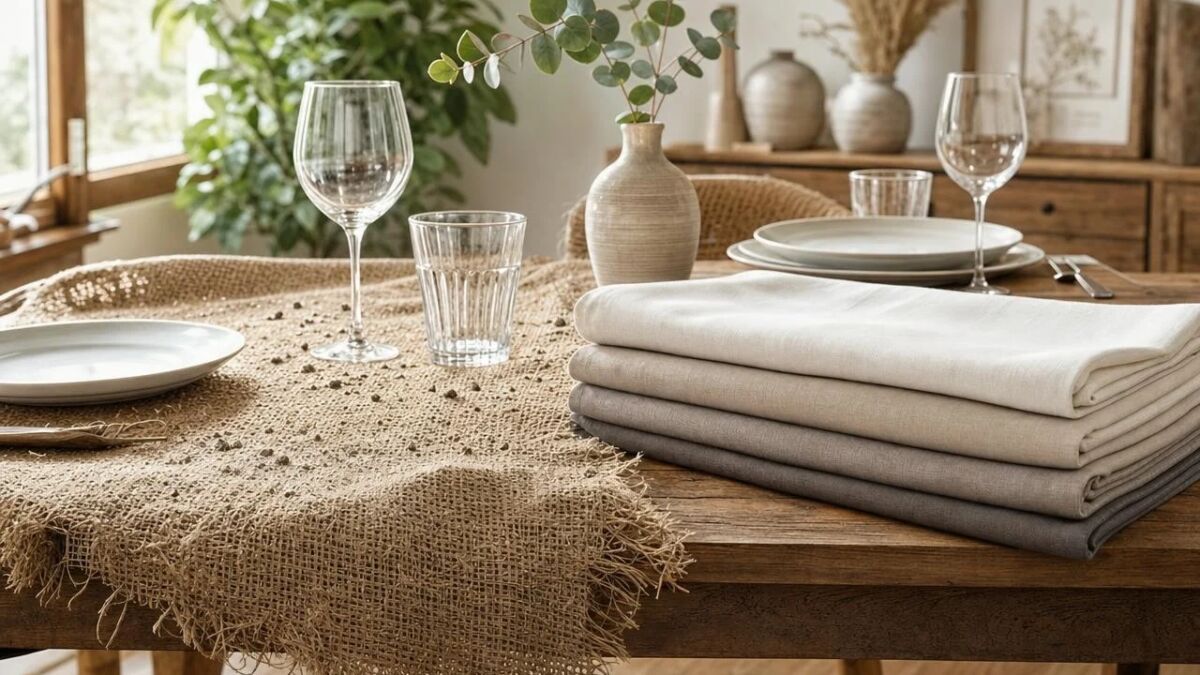
A long table, a few bouquets of dried flowers, pretty stoneware plates, and at the center, a jute burlap tablecloth that gives that rustic vibe you see all over social media. Many hosts have had the same idea for a family meal or a wedding, convinced they were doing the right thing. Then the plates are set, the dishes arrive… and one detail spoils it all.
For several summers now, jute fabric has been invited to tables for the August 15th celebration and bohemian gatherings, carried by its rugged look and a very natural image. Shops offer tablecloths, runners, and placemats in jute as if it were an obvious decor choice. Except that several textile and health specialists are now sounding the alarm: what ends up on your tableware is far from ideal.
Jute Burlap Tablecloth: Beige Dust and Porosity on the Menu
Jute fabric comes from a very loose weave, inherited from its original use for grain sacks. This porous mesh absorbs dust and impurities… then releases them again as soon as you move a plate or place a hot dish. Result: the fibers release a fine beige dust that settles on glasses, cutlery, and the rims of plates, sometimes without immediately understanding where it came from.
Over time, this fabric can also retain odors and fade, which heightens the impression of a “dirty” surface. On a simple table runner, it’s already unpleasant; on an entire tablecloth, just under a leg of lamb or a pie, it becomes frankly problematic. By contrast, a linen tablecloth or a washed cotton gauze lies flat, does not shed, and sends no particles onto the table.
Nappe en toile de jute et allergies : un risque discret, un entretien compliqué
Another point often overlooked: possible allergic reactions. Jute particles can irritate the skin or the airways in some sensitive individuals. A study published in 1938 in the Journal of Allergy described five clinical cases of workers showing sensitization to jute. Contact dermatitis, coughing, and breathing difficulties can occur, especially around a table where bare arms, hands, and sometimes the chins of children rest.
On maintenance, the jute tablecloth also complicates life. This fabric does not like hot water or vigorous washing cycles: a machine wash at high temperature often distorts or shrinks it. Cleaning must stay very gentle, in cold water, without wringing or twisting. A wine or sauce stain that would come out easily on cotton or linen becomes a headache, with results that are rarely spotless.
What Alternatives to the Jute Tablecloth and the Layering Trick
To keep a natural vibe without these drawbacks, several fabrics do a much better job. Cotton gauze offers a soft drape and a very contemporary crinkled look; linen brings elegance and durability; coated cotton wipes clean with a quick sponge, ideal with children; some high-quality polyesters even imitate linen while remaining very easy to care for, with no dust or lingering odor.
Decorators often advise a simple compromise: keep the jute as a purely decorative element, but never in direct contact with the tableware. A practical trick is to lay the jute underneath and, on top, place a table runner or a wide band of cotton or linen, or even individual fabric placemats. Just before serving, a quick test is enough: run your finger under a plate set directly on the jute; if a beige mark appears, it’s better to add a textile barrier before seating the guests.