How to Choose and Design a Comfortable All-Season Terrace

You must consider the orientation of the space, the quality of materials, air circulation, and ease of maintenance. Even before choosing a shading solution, several criteria deserve careful attention to achieve a comfortable, durable space that is particularly suited to the habits of those who will actually use it.
Analyze Exposure and Site Constraints
Observe the Terrace’s Orientation
Orientation governs the periods of sunlight and, in turn, the comfort felt throughout the day. A south-facing terrace enjoys steady light from morning to night, while a east-facing exposure mainly receives soft morning rays. To the west, the sun hits low in the late afternoon—a powerful light that is often difficult to counter effectively. It’s best to first observe the natural shade zones already present before diving into any solution.
Consider the Local Climate
Wind patterns, frequency of rain, and the intensity of summer heat all matter, just as the presence of trees, neighboring walls, or adjacent buildings can modify both light and air flow. Focusing solely on the appearance or dimensions of a structure while neglecting these factors risks comfort that will be hard to regain later.
Note: exterior sun protections actively contribute to summer comfort by limiting direct heat gains while still allowing air to circulate when designed to do so.
Choose an Appropriate Shading Solution
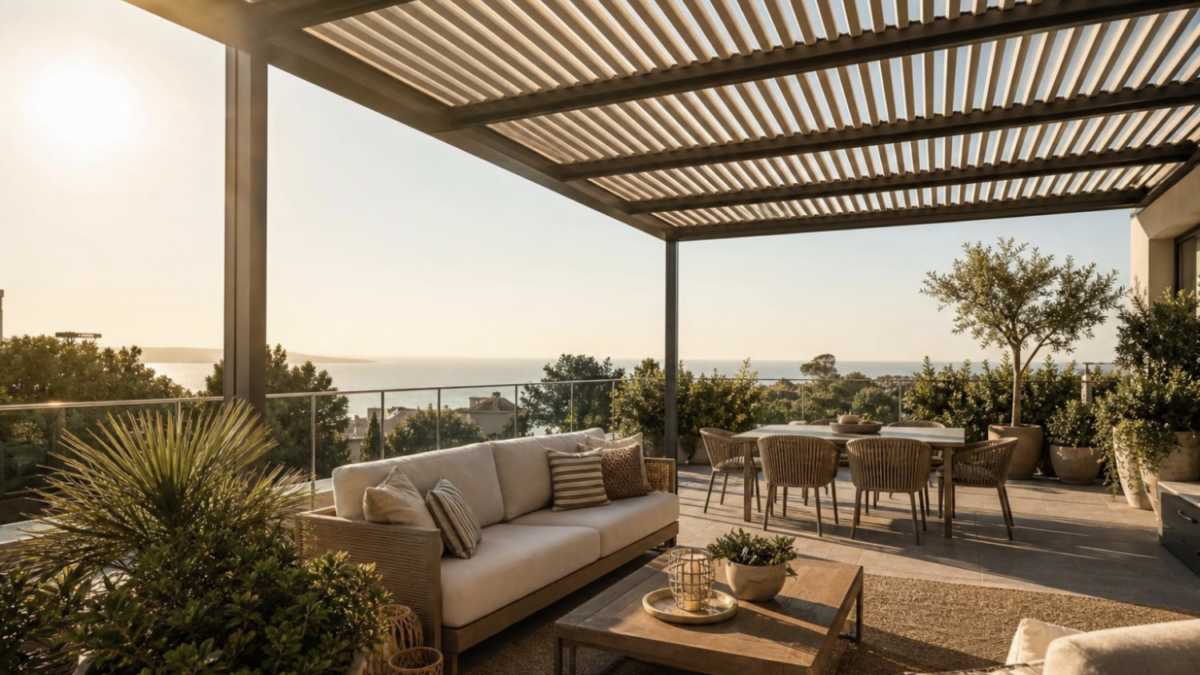
Awnings, shade sails, pergolas, or a gazebo—the options are plentiful. Each has its own merits in terms of sun protection, weather resistance, modularity, maintenance, architectural integration, and, of course, budget. For regular use, a fixed solution is generally more appropriate, whereas a removable installation better suits a temporary or seasonal need.
For those weighing between a prefabricated solution and a custom setup, a kit pergola can represent an interesting option to explore, depending on the available dimensions, the existing support, and installation constraints unique to each site.
Check Technical Aspects Before Installation
Sizing and Placement
Measure the usable area precisely and plan for sufficient circulation space: this is a step that should not be neglected. Available height, alignment with openings, and compatibility with the façade must also be checked — nothing is worse than an oversized structure that ends up dimming interior light.
Anchors and Safety
The nature of the support—slab, masonry terrace, soft ground, or façade—determines the anchor type to favor, which must be suited to the structure’s weight as well as wind exposure. Drilling through waterproofing or a rooftop terrace without prior assessment is strongly discouraged. When in doubt, the expertise of a professional makes all the difference, especially for work at height.
Plan for Procedures and Maintenance
Check the Applicable Rules
Before getting started, it’s wise to consult the urban planning department of your municipality, verify the provisions of the local urban plan, and, where applicable, the condominium rules. Formalities vary depending on the area involved, the chosen placement, and whether the installation is temporary/demountable or permanent.
Anticipate Simple Maintenance
Regular inspection of fixings, joints, and water drainage can substantially extend the life of the installation:
- cleaning surfaces with products suitable for the material;
- removing leaves and debris that may retain moisture;
- checking the components most exposed to wind.
Practical Example: A West-Facing Terrace
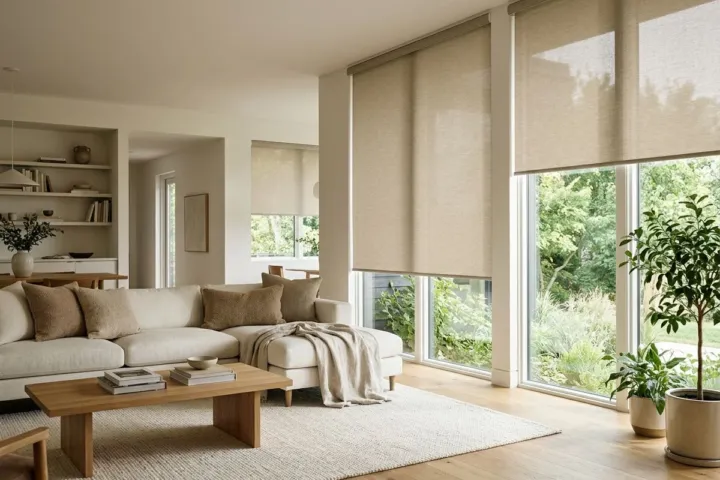
Consider a terrace that heats up strongly in the late afternoon: it requires a sufficiently deep protection, possibly enhanced by a lateral screen, without compromising air circulation and risking a confined zone. Pairing this protection with closing the blinds on the glass doors further enhances the overall effectiveness. This example clearly illustrates one key point: a prudent choice depends primarily on the actual exposure of the space, not on a one-size-fits-all model.
Conclusion
Designing a terrace involves juggling multiple parameters: orientation, climate, dimensions, fixings, regulations, and maintenance. Taking time to establish a precise assessment before selecting a solution helps balance shade, light, and ventilation—ensuring a truly comfortable and durable outdoor space, no matter the season.