This antique dinner service with botanical motifs can fetch up to $300 — do you have all the pieces?

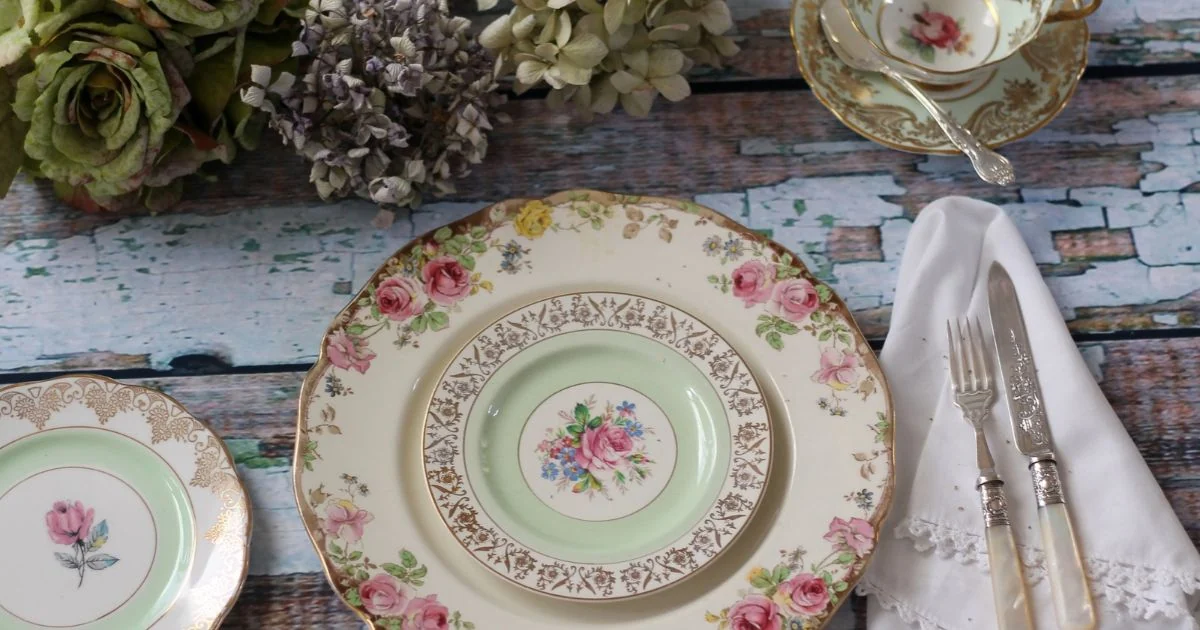
They often lie forgotten at the back of a sideboard, pulled out only for special occasions. These antique plates, decorated with flowers, leaves, or delicate botanical garlands, have sometimes passed through several generations without anyone questioning their worth. Yet some sets of dinnerware can intrigue collectors and fetch around 300 euros, or more for the most sought-after ensembles. Before you part with this china, check one essential detail: how many pieces are actually together?
This antique tableware bears the signature of two historic manufacturers
Behind these patterns sometimes lies a signature familiar to antique-seekers: Digoin Sarreguemines. The Sarreguemines pottery works, located in Moselle, produced for decades fine earthenware tableware for French households. Plates, bowls, small dishes, tureens, and sauce boats formed sets designed for family meals. Their decorations, ranging from subtle to highly worked, help explain part of their current appeal. But beware: not all floral plates are rare, far from it.
The history of this dinnerware goes back to the end of the 18th century, with the creation of the Sarreguemines faience factory in 1790. After the Moselle region was annexed by Germany in 1871, the company opened a branch in Digoin, Saône-et-Loire, in 1876. This move allowed it to continue producing for the French market. The two names appear on many pieces, now familiar in households. Some also bear the label “Opaque,” which designates a particularly durable fine earthenware, and not porcelain.
Is your Digoin Sarreguemines service worth money? Here’s what to check
To determine whether your set belongs to this line, you don’t need to start with a catalog: simply turn over a plate. On the back, the crowned crest, the initials “U & C,” or the inscription “Digoin & Sarreguemines” provide valuable clues. Marks bearing “DV” or “Véritable opaque” refer more to 20th-century productions. These indicators roughly date the piece, but they do not guarantee a high price. The model name, when it appears beneath the piece, can be even more revealing.
It is especially the composition of the service that changes the game. A dozen matching plates do not automatically command the same price as a set that also includes flat plates, bowls, and dessert plates, but also a tureen with its lid, a salad bowl, smaller serving dishes, and presentation platters. Decorative patterns such as “Agréste” or “Papillon” draw more attention than the very common floral productions. The coherence of the collection is as important as its size: mismatched pieces, even if old, will not fetch the same interest.
An antique service can be worth 40 or 850 euros: here’s what makes the difference
Auction results, however, invite a measured view. In January 2025, a Digoin service of about 45 pieces, decorated with foliage and edged with a gold border, was sold for only 40 euros in Angers. Conversely, a service labeled “Agréste” sold for 200 euros in June 2026, while a “Papillon” set of 95 pieces reached 850 euros in 2016. A figure close to 300 euros remains plausible for a well-regarded and sufficiently complete service, but it does not automatically equate to value for every flower‑patterned dinnerware.
Before any appraisal, take the time to gather the pieces and examine them one by one. A crack, a chip on the rim, worn gilding, or a missing lid can weigh heavily on the price. Also photograph the marks on the back, then compare your model to completed sales, rather than mere listings. If the service appears particularly well preserved or difficult to identify, an auctioneer can provide guidance. Even if it doesn’t reach 300 euros, this dinnerware sometimes deserves more than a box forgotten in the basement.