One Light Isn’t Enough: The Decorators’ Three-Light Theory That Instantly Adds Character to Your Home

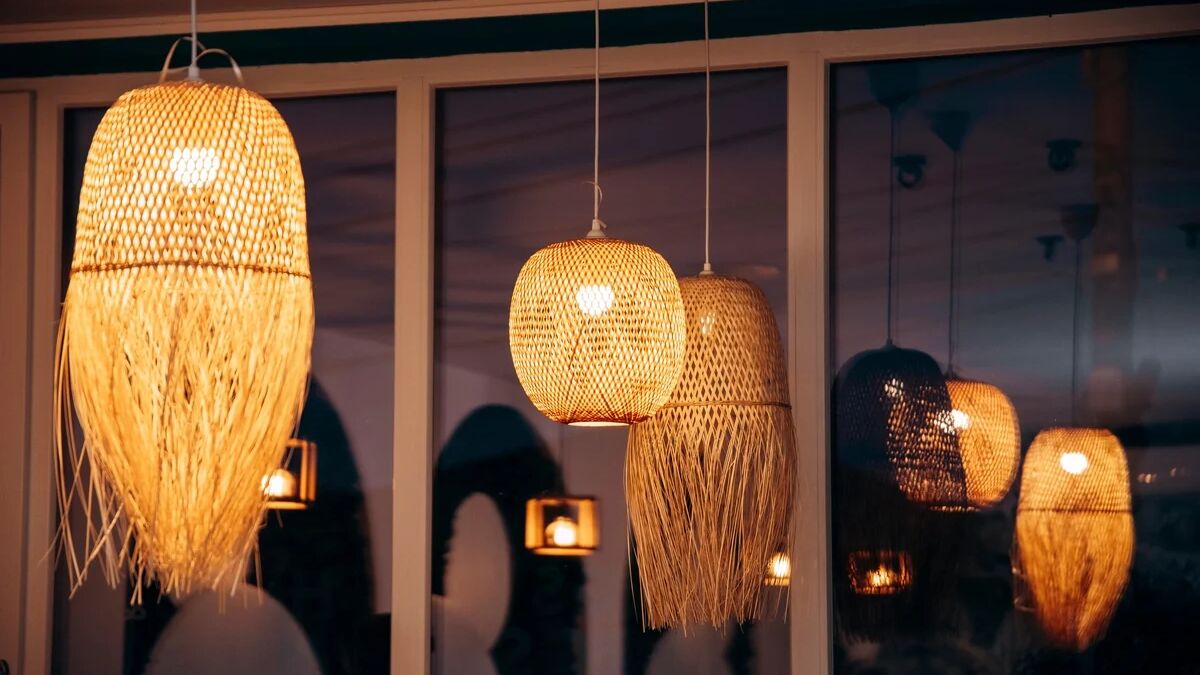
It sometimes only takes turning on a lamp to change the mood of a room. Yet, even with a beautiful sofa, soft textures, and carefully chosen decor, some living rooms remain desperately cold after dark. The fault isn’t always in the colors or furniture, but in a detail that isn’t given enough attention: lighting. A ceiling pendant, as lovely as it is, doesn’t necessarily make an interior feel welcoming.
As winter approaches and natural light becomes scarcer, design professionals lean on a simple trick: multiply light sources rather than rely on a single source. This method, known as the “three-source theory,” involves pairing different types of light to meet daily needs while creating a pleasant ambience. As ELLE Décoration reminds us, it’s not just about piling up lamps, but about thinking through their roles and placement.
Lighting: why a single lamp isn’t enough to make a living room warm
In many interiors, the ceiling light remains the primary source of illumination. Handy for lighting a room quickly, it, however, has its limits. When it’s too powerful, it can produce an even light that flattens the room’s volumes and gives the living room an almost impersonal atmosphere. Conversely, a bulb that’s too dim risks leaving some areas in darkness. In both cases, the space lacks nuance. Yet it’s precisely the contrasts between illuminated zones and softer areas that help create a warm ambience.
That’s where the three-light-source rule comes in, a method commonly used in interior design. It rests on combining three lighting categories: general lighting, functional lighting, and accent lighting. Each serves a different purpose. The first enables easy movement around the space, the second supports daily activities, and the third highlights the decor. By blending them, you get a room that’s more pleasant to live in, with an atmosphere that can evolve throughout the day. This approach is especially appealing in winter, when the living room becomes the favored refuge for evenings at home.
The Three-Source Rule: here are the fixtures to pair in each room
The first step is to plan for general lighting, capable of distributing a light that is evenly diffused across the entire room. A pendant, a ceiling fixture, or well-spaced spotlights can fill this function. Next comes functional lighting, more targeted, used for a specific activity. In the living room, this could be a reading lamp placed near the armchair or a floor lamp beside the sofa. In a kitchen, this role is often fulfilled by under-cabinet lighting, which helps you see the workspace more clearly. The goal is to bring light precisely where it’s needed, without having to illuminate the whole room.
The third source is perhaps the one that makes all the difference decoratively. Called accent lighting, it draws the eye to a particular element: a painting, a bookshelf, a wall niche, or a beautiful plant. A small lamp on a console, a wall light directed at a textured wall, or discreet lighting integrated into a shelf are enough to give the space depth. In a living room, for example, you can combine a central pendant, a floor lamp near the sofa, and a table lamp on a sideboard. Three fixtures with complementary functions that let you create multiple atmospheres, without necessarily turning them all on at the same time.
This winter, how to apply the three-source rule without multiplying expenses?
Good news: you don’t have to buy three new lamps to adopt this method. Start by observing the light fixtures you already own and ask yourself what they’re really for. An unused bedside lamp can find a place on a living room console, while a small floor lamp can transform a dark corner into a reading nook. Also think about varying the heights: light coming from the ceiling, light at eye level, and a third, lower light help distribute the points of illumination more evenly. Lampshades made of fabric, paper, or opal glass can also help diffuse a softer light, especially appreciated during long winter evenings.
The choice of bulbs deserves careful attention as well. For a welcoming mood in the living room or bedroom, a color temperature between 2,700 and 3,000 kelvin generally serves as a good reference. This warm white light more closely resembles traditional lamps than very bright, sometimes perceived as cold, lighting. Dimmable LED bulbs also let you adjust brightness according to the moment: brighter for reading or entertaining guests, dimmer for watching a movie. And to reinforce this atmosphere, a few small decorative light sources, such as a string of fairy lights, can complete the ensemble. The secret to a warm interior, therefore, does not lie in the power of a single lamp, but in how several lights respond to one another.