
Jewelry Hidden in Grandmothers’ Boxes Could Be Worth a Fortune — Signs to Look For (Interview)

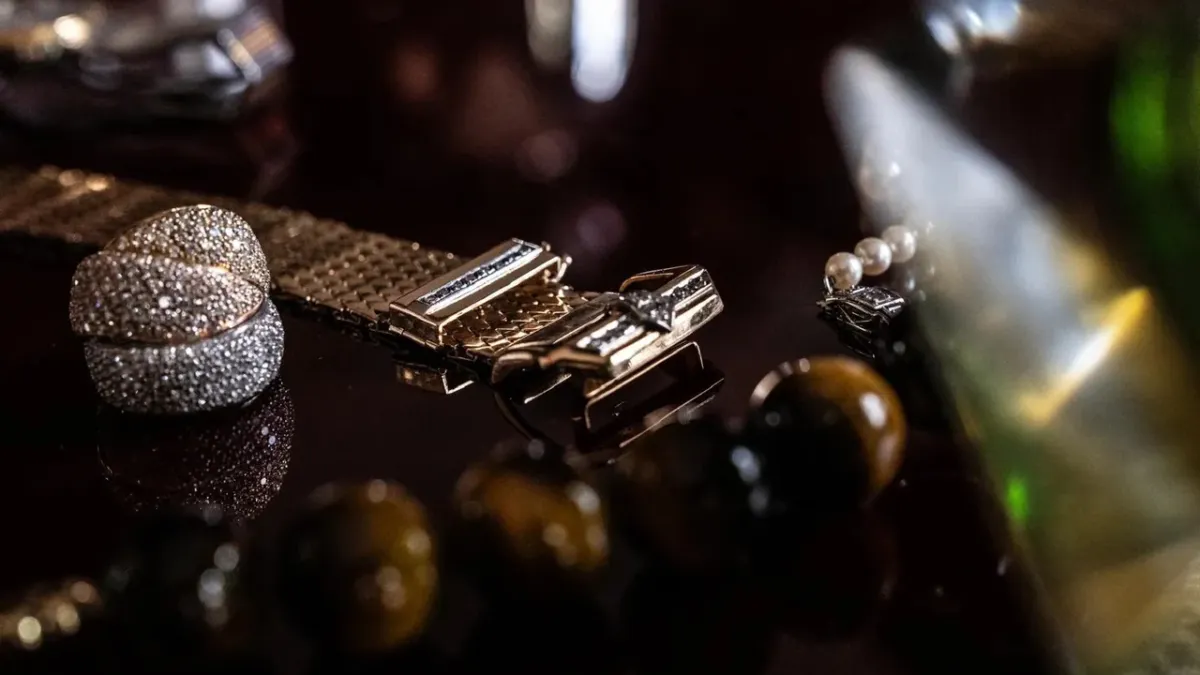
Who has never rummaged through a family’s old jewelry box, hoping to stumble upon a little treasure? Between out-of-date rings, tangled necklaces, and bracelets whose origins no one can quite recall, some pieces could hold delightful surprises. But you have to know how to recognize them! For behind a vintage jewel that looks ordinary, there can sometimes be a creation by a great jeweler, while a piece that seems valuable may be nothing more than a replica.
To learn how to tell the difference, we spoke with Mélanie Eram, director of Bijoux d’Antan, a house specializing in vintage and second-hand jewelry sales, whose site was launched in April 2026. Used to evaluating antique pieces, she shared with us her tips for spotting valuable jewelry, identifying counterfeits, and avoiding bad deals, whether you’re hunting at flea markets, online, or among family heirlooms.
Antique Jewelry, Those Small Details That Help Recognize a Piece’s Value
Before swooning over a pretty ring at a flea market stand, it’s better to take a few seconds to examine it. According to Mélanie Eram, the first instinct is to search for hallmarks, those tiny marks engraved on jewelry that provide indications about their composition or maker. A detail that can easily go unnoticed when you don’t know where to look. “It’s hard to buy jewelry without a loupe,” the expert explains. With this tool, it becomes easier to distinguish the symbols stamped in the metal. The eagle head corresponds to 18-carat gold, while the Minerva head is a hallmark used for silver. On some imported or second‑hand pieces, you may also encounter a little owl. As for the inscription 925, it designates an alloy containing 92.5% silver.
But hallmarks aren’t everything. The look of the jewelry also deserves careful scrutiny. A gold-colored metal that flakes away or reveals another material beneath its surface should raise suspicions. And for good reason, solid gold is a particularly resistant metal: while it can lose its luster over time, it won’t chip like a simple plating. A detail that can therefore make all the difference! “The appearance of the metal and the hallmark are two reference points,” summarizes Mélanie Eram. These clues allow for a first cut, even if an expert appraisal is still necessary to confirm the nature of a piece. Another detail to watch: price. An antique gold ring offered for a derisory sum isn’t necessarily the bargain of the century. And for good reason, a gold jewel already has a minimum value tied to its weight and the purity of the precious metal it contains. In other words, if its selling price is lower than the value of the gold it contains, there’s cause for pause! During our interview, Mélanie Eram mentioned a gold price around 70 to 80 euros per gram in the months leading up to, a figure that varies with the market and the metal’s purity. “A piece of jewelry that’s cheaper than gold, yes, I’d find that odd,” she told us.
Cartier, Van Cleef, Art Deco… Which Vintage Jewelry Are the Most Sought After?
While some old jewelry charms first and foremost for its aesthetics, others attract collectors for their signature. At Bijoux d’Antan, Mélanie Eram observes a shared interest between pieces from major houses and unsigned creations. Some buyers seek a prestigious brand, while others simply favor a model or design that appeals to them. Among the pieces most coveted, she cites the famous Cartier Love bracelet and Van Cleef & Arpels’ Alhambra jewelry. Their popularity unfortunately has a downside: these creations are also among those that suffer from numerous imitations. And counterfeiters don’t stop at the jewelry itself: “Even when they have branded boxes, we check the boxes and the papers to be sure, because there have been so many imitations that there are even fake boxes and fake papers,” she notes. When it comes to unsigned vintage jewelry, two styles stand out in particular. First, Art Deco jewelry, recognizable by their geometric shapes and crafted lines. Then daisy rings, composed of a central stone surrounded by smaller stones, often diamonds. A design that is easily linked to the famous engagement ring of Lady Diana, featuring a sapphire surrounded by diamonds.
But the most beautiful surprises aren’t always behind the display cases. Some patiently wait in family drawers. When we asked whether she had ever discovered precious jewelry among inherited pieces, Mélanie Eram answered without hesitation: “Yes, this has happened to me many times.” She recalls finding, in the middle of family collections, creations by great artisans, including Georges Lenfant, a French jeweler. “It’s often in grandmothers’ boxes that you find incredible pieces,” she tells us. Jewelry whose value can be hard to guess, especially when no brand name appears on the piece. The secret sometimes hides in a master hallmark, a mark that allows identifying the workshop that produced the jewel. On French creations, that mark typically takes the form of a diamond shape containing letters and a symbol. For individuals who want to know the value of their inherited jewelry, Mélanie Eram recommends consulting a professional. She notes that free appraisal days are regularly organized and provide a first estimate.
Buying an Antique Jewel at Flea Markets or Online: How to Avoid Counterfeits and Stolen Pieces?
Finding a nice second-hand jewel is one thing; being sure of its authenticity is another. And on this front, Mélanie Eram does not joke. For pieces from big houses, she examines the quality of the finishes, engravings, assemblies and manufacturing details. At Bijoux d’Antan, her team also uses devices that analyze metal composition and calls on the Laboratoire Français de Gemmologie for certain stones. This vigilance also concerns the provenance of the jewelry. For branded pieces, serial numbers play an important role. They can help trace a jewel reported as stolen, provided that its number has been kept and flagged. Mélanie Eram explains that she has already encountered this situation at auctions, when a bracelet had been identified by the police thanks to its serial number, then returned.
Before buying an antique jewel, several verifications can prevent unpleasant surprises:
- Examine the hallmarks with a magnifier to look for indications about the metal and the maker.
- Observe the jewelry’s condition, its finishes, and any wear on the plating.
- Compare the asking price with the value of the precious metal, especially for gold pieces.
- Ask for certificates and available documentation, especially for creations from major houses.
- Check the serial number if present and inquire about the piece’s provenance.
- Consult a professional when a piece seems particularly valuable or difficult to authenticate.
What about remedies if a piece purchased turns out to be fake? At Bijoux d’Antan, the director assures that a customer can obtain a refund if they provide proof that a piece sold as authentic is a counterfeit, even years after the purchase: “If I sell you a jewel telling you it’s real and, three years later, you discover it’s fake, we commit to refund you with proof that it’s truly a fake.”
The situation can be more delicate for a stolen jewel, whose provenance isn’t always easy to trace. The expert reminds that a professional can itself face restitution after purchasing a piece in good faith. A reality that explains her caution during expert appraisals, even when a jewel appears exceptional. For the curious who want their finds examined, Bijoux d’Antan currently has a showroom in Paris’s 2nd arrondissement, accessible by appointment. Mélanie Eram also told us she is working on opening a future location in the 6th arrondissement of the capital.
Keep reading
 Decor Styles If You Grew Up in the 90s, This Christmas Tree Will Bring Back Memories: Multicolored Garlands and Mismatched Ornaments Are Making a Comeback
 Decor Styles 1960s White Plates With Green Leaf Pattern Worth Almost $1,000, Say Collectors
 Decor Styles 1845–1950 Item Dazzled Sunday Tables; Collectors Pay High Prices